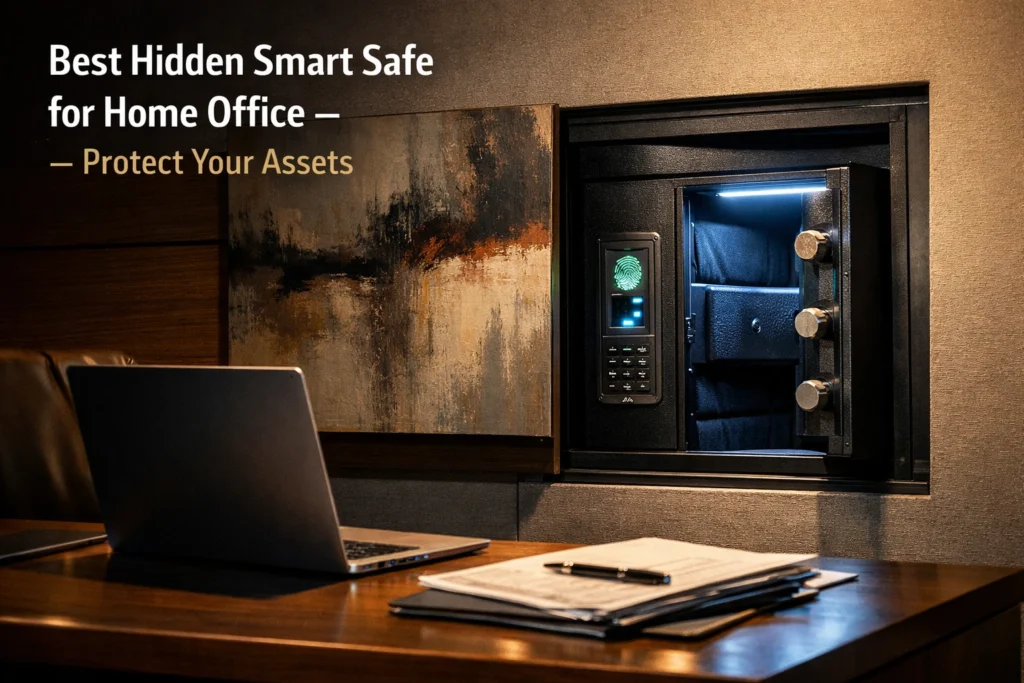

Quick Answer: What is the best hidden smart safe for a home office?
The best hidden smart safe for home office is one that combines biometric access, WiFi tamper alerts, and stealth mounting capabilities. Top rated models like the Yale Smart Safe and Vaultek VS Series are ideal because they offer remote monitoring via smartphone apps and can be seamlessly recessed into walls or bolted inside desk drawers for maximum concealment.
In an era where the home office has become a sanctuary for both professional data and personal wealth, the standard “metal box” is no longer sufficient. Whether you are securing sensitive client contracts, expensive tech hardware, or heirloom jewelry, the stakes have never been higher. The challenge lies in finding a solution that offers robust protection without screaming “valuables inside” to anyone walking past your desk.
This guide explores how to protect your valuable assets by choosing the best hidden smart safe for home office environments, combining cutting edge biometric technology with the ancient art of concealment.
Why Traditional Safes are Failing the Modern Home Office
For decades, the heavy mechanical dial safe was the gold standard. However, in a fast-paced home office, these are often cumbersome. If a safe is difficult to open, you are less likely to use it consistently. Modern security requires speed, audit trails, and connectivity.
The Evolution from Mechanical to Smart Biometrics
Smart safes have replaced the spinning dial with high resolution fingerprint scanners. These systems allow for “one touch” access, which is critical during an emergency. Unlike traditional safes, smart versions can log exactly who opened the safe and at what time, providing a digital audit trail. According to expertsecurity testing by CNET, these biometric advancements significantly reduce the time spent accessing critical documents while maintaining high security.
Why “Hidden” is the First Line of Defense
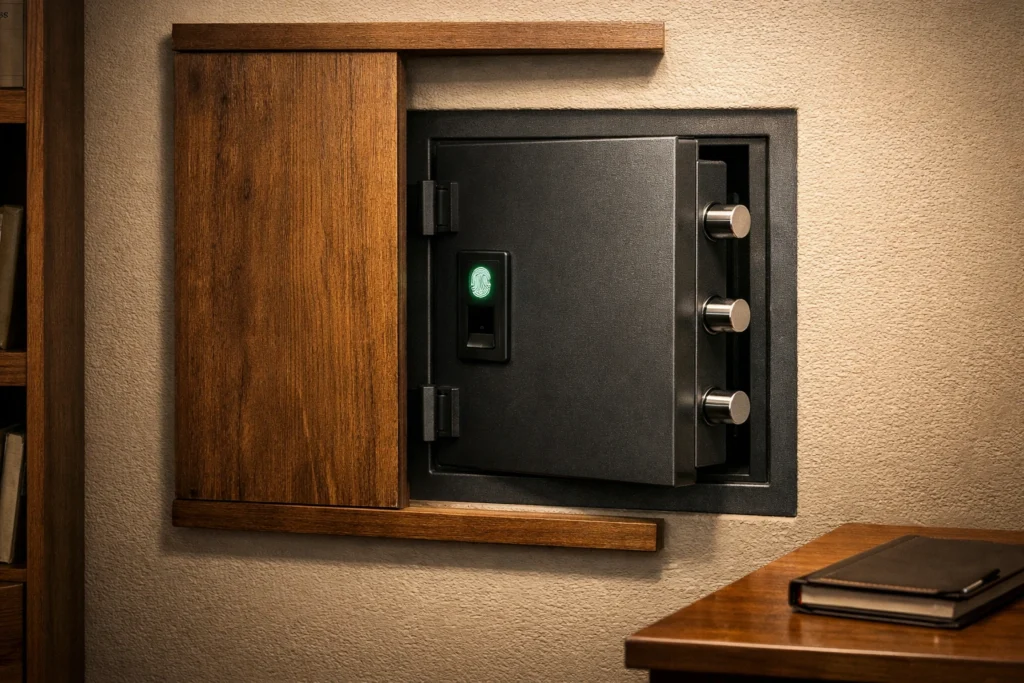
Security experts agree: if a burglar can’t find it, they can’t break it. A “hidden” safe adds a psychological layer of security. By integrating your safe into the architecture of your office behind a false wall or inside a desk drawer you buy yourself the most valuable commodity in security: time.
Critical Features of the Best Hidden Smart Safe for Home Office Use
When shopping for a high tech locker, you shouldn’t just look at the price tag. You need to evaluate the “Smart to Steel” ratio. A safe with a great app but a thin door is just an expensive toy.
Biometric Reliability and Speed
The best hidden smart safe for home office use must feature a capacitive fingerprint sensor. Unlike older optical sensors, capacitive versions are harder to fool with “lifted” prints and work more reliably even if your hands are dry or slightly dusty.
App Connectivity and Tamper Alerts
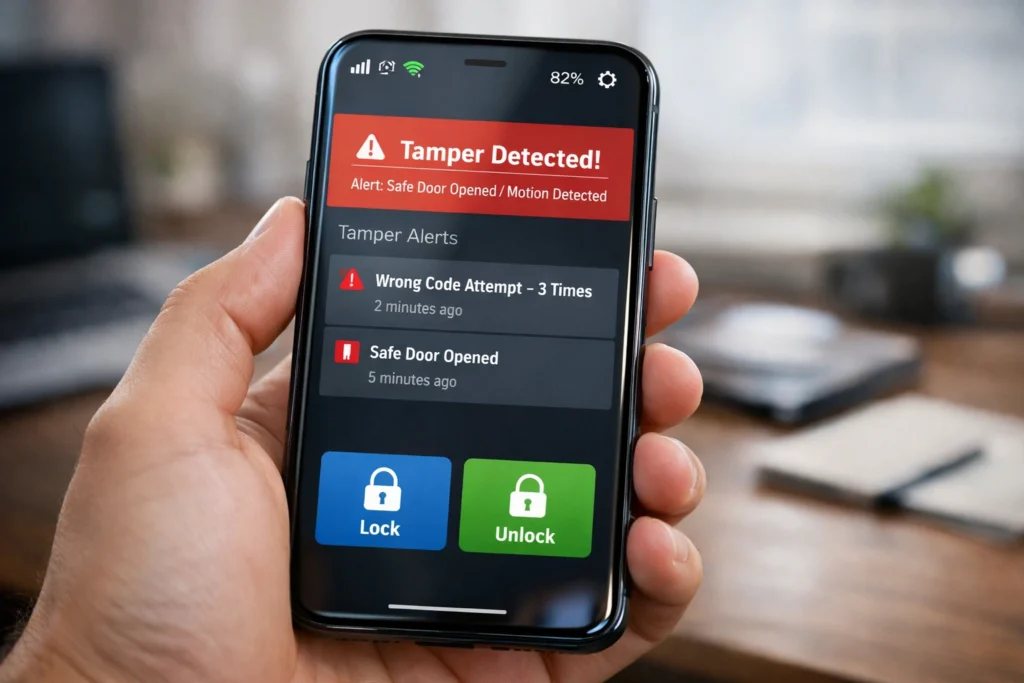
The “Smart” in smart safe refers to its ability to talk to you. Premium models like the Yale Smart Safe connect to your WiFi network. If someone attempts to move the safe or enters the wrong code three times, you receive an instant notification on your smartphone. This real-time visibility is a game changer for remote workers who may be in another part of the house.
Physical Build Anti Pry Hinges and Heavy Gauge Steel
Don’t let the software distract you from the hardware. Look for
- 14 gauge steel or thicker for the body.
- Internal hinges that cannot be cut off with a grinder.
- Motorized deadbolts that automatically engage when the door closes.
Top Strategies to Hide Your Smart Safe in Plain Sight
Concealment is an art form. In a home office, you have unique opportunities to hide your security hardware where no one would think to look.
Recessed Wall Installations
A recessed safe fits between the standard 16 inch studs of a US wall. Once bolted in, it sits flush against the drywall. You can then cover it with a framed map, a painting, or even a shallow bookshelf. This is the ultimate “hidden” setup for protecting flat assets like passports, tablets, and cash.
Furniture Integrated Safes
Many modern desks now feature “stealth” drawers. You can bolt a low profile smart safe directly to the floor of a desk drawer. While internal security is vital, remember that a complete security strategy involves your home’s exterior as well. For those looking to deter intruders before they even reach the office, checking out a guide on the best outdoor smart siren for security is a highly effective secondary measure.
Top Smart Safes for 2026 Comparison
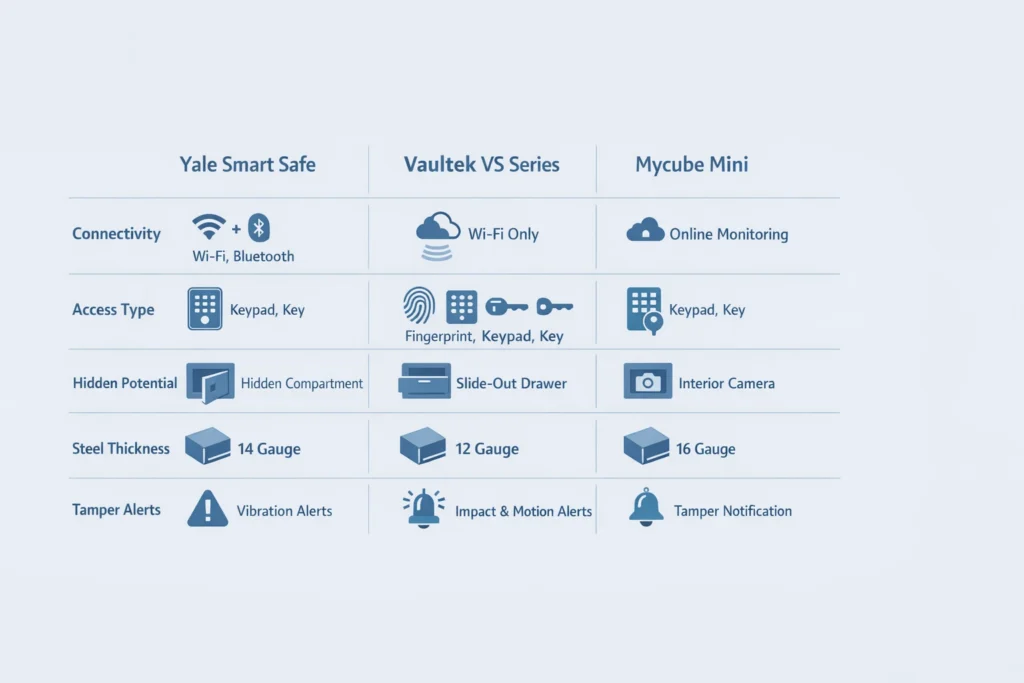
| Feature | Yale Smart Safe | Vaultek VS Series | Mycube Mini |
| Connection | WiFi / Bluetooth | Bluetooth / Long range | WiFi |
| Primary Access | App / Keypad / Key | Biometric / Keypad | Biometric / Keypad |
| Best For | Ecosystem Users | Tech Enthusiasts | Interior Design |
| Hidden Potential | High (Shelf/Wall) | Extreme (Low Profile) | Moderate (Cabinet) |
Maintenance and Emergency Access: What Happens When Tech Fails?
One of the biggest fears users have is being “locked out” of their own technology. What if the WiFi goes down? What if the batteries die?
The best hidden smart safe for home office models always include a “fail safe” system. This usually includes:
- Physical Backup Keys: A high security dimple key that bypasses all electronics.
- External Power Jump: A USB C port or a 9V battery terminal on the outside of the safe to provide temporary power if the internal batteries fail.
To keep your safe in peak condition, replace batteries annually and ensure the fingerprint sensor is wiped clean of oils once a month.
Conclusion
To truly protect your valuable assets, you must look beyond the traditional hardware store lockbox. The best hidden smart safe for home office use is one that disappears into your decor while remaining hyper-connected to your digital life. By prioritizing biometric speed, app based tamper alerts, and clever concealment, you create a fortress that is both invisible to intruders and effortless for you.
Invest in a safe that matches the value of the items inside because peace of mind is the ultimate office luxury.
FAQ Section
Q: Can a smart safe be hacked?
While no device is 100% unhackable, reputable brands use AES-128 or 256-bit encryption. It is significantly harder to hack the safe’s software than it is to physically pry open a cheap hardware store safe.
Q: Where is the best place to hide a safe in a home office?
Avoid the master bedroom closet it’s the first place burglars look. Instead, opt for the lower sections of a built in bookshelf or inside a disguised “bottom drawer” of your office desk.
Q: Do smart safes require a monthly subscription?
A: Most brands like Yale and Vaultek offer free basic app features. However, some advanced cloud based audit logs may require a small monthly fee depending on the manufacturer.