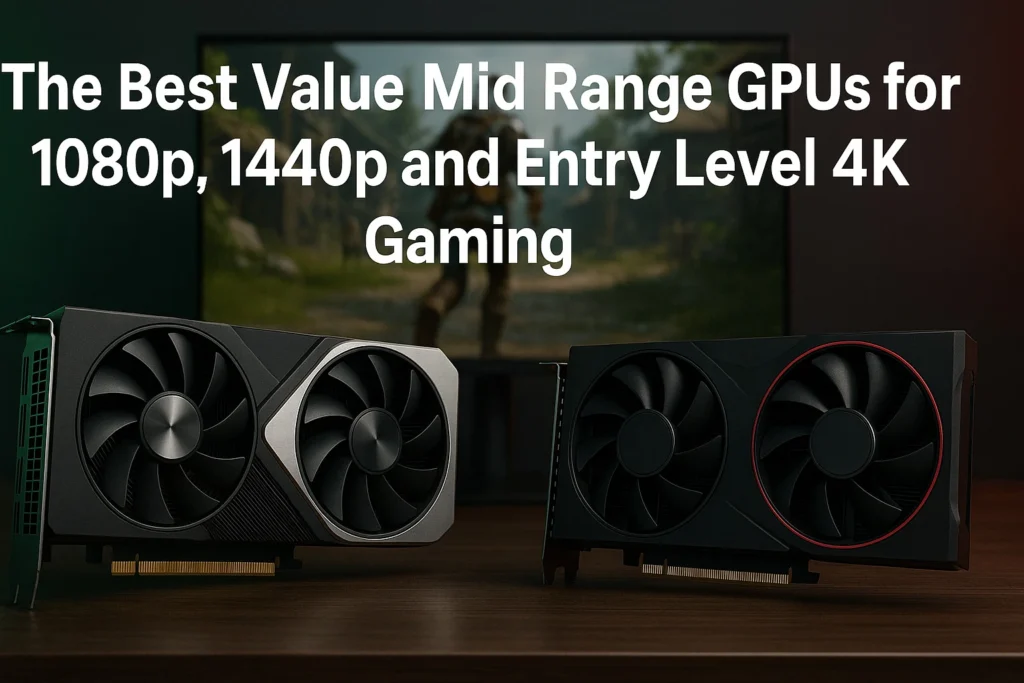

The pursuit of stunning graphics and high frame rates doesn’t always have to come with a staggering price tag. For most PC gamers, the sweet spot lies within the mid range a segment where performance, price, and features intersect to deliver exceptional value. The challenge lies in finding the specific card that perfectly balances cost with the gaming resolution you primarily target. This comprehensive guide breaks down the current market to identify the best value mid range GPUs for smooth, enjoyable gaming across 1080p, 1440p, and even entry level 4K.
Defining Value What Makes a Mid Range GPU a Smart Buy?
A graphics card’s “value” extends beyond a simple price tag. A smart buy is one that maximizes performance for today’s games while offering a degree of future proofing without overspending on features you don’t need.
Price to Performance Ratio Explained

The true measure of a GPU is its price to performance ratio. This means looking past the raw MSRP and focusing on the Frames Per Second (FPS) it delivers in popular titles, relative to its cost. Often, a GPU from the previous generation or a slightly lower tier model can punch above its weight class, offering 90% of a flagship’s performance for 60% of the price. We analyze GPU benchmarks to isolate these hidden gems. If your budget is tighter than the mid range, you may also want to explore our guide on the best budget graphics cards under $300 in 2025 to see how much performance you can still get for less.
The Role of VRAM and Bus Width in Longevity
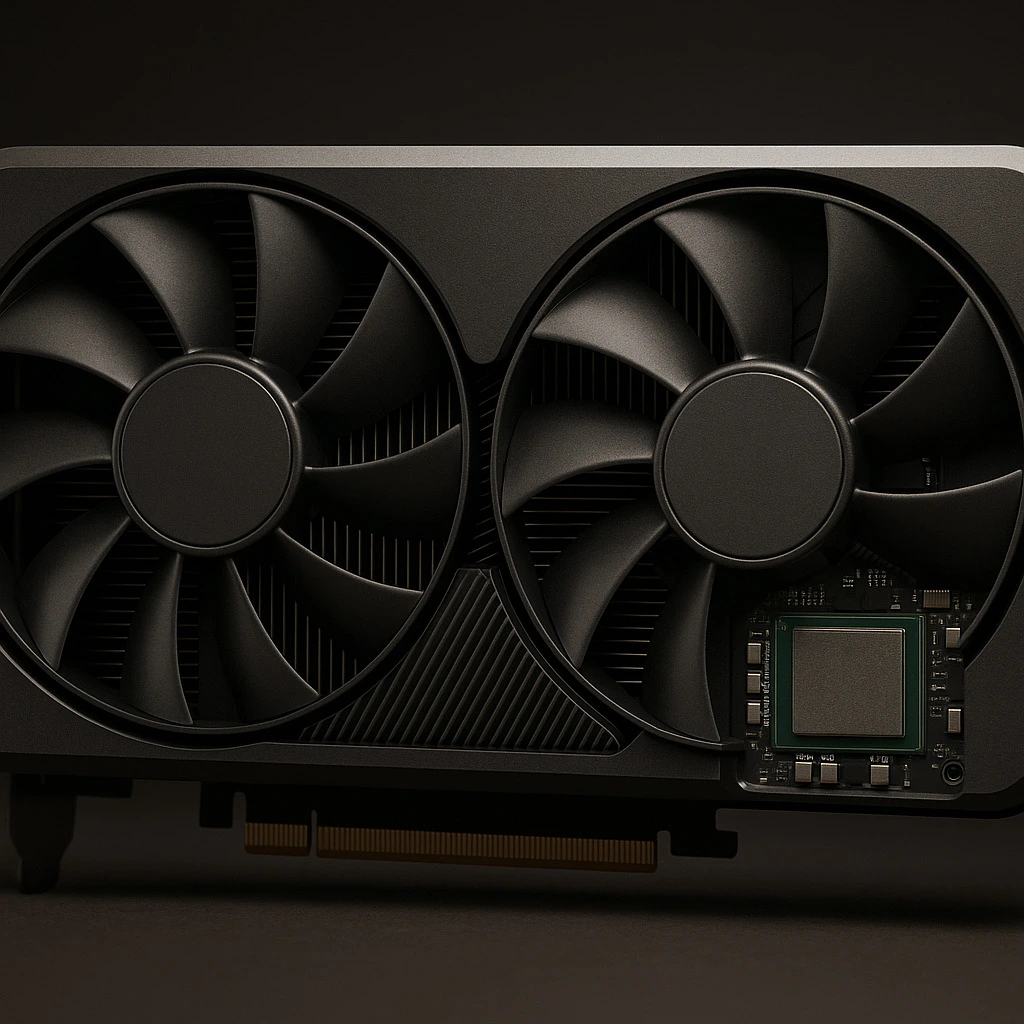
Video RAM (VRAM) is becoming increasingly critical, especially at higher resolutions like 1440p and 4K, where textures demand more memory. Choosing a mid range card with at least 8GB or, ideally, 12GB of VRAM is essential for modern titles. A wider memory bus width also ensures the GPU can access and transfer data quickly, preventing performance slowdowns and stutters.
Efficiency Matters Power Consumption vs. Cost
A true value card also considers the Total Cost of Ownership (TCO). A more power efficient GPU, like many in the NVIDIA and AMD current generations, saves money on your electricity bill and allows you to use a smaller, less expensive Power Supply Unit (PSU). Lower wattage requirements mean better temperatures and quieter operation in your PC build budget.
The 1080p Champion Best Value Mid Range GPUs for High Refresh Gaming
The 1080p (Full HD) resolution is still the most common standard for PC gaming. The goal here is not just 60 FPS, but maximizing frame rate for high refresh rate monitors (144Hz, 240Hz). This tier offers the maximum graphics card performance per dollar.
Top NVIDIA Recommendation RTX 4060 Analysis
The NVIDIA GeForce RTX 4060 is a formidable 1080p performer. Its efficient architecture and access to DLSS 3 with Frame Generation dramatically boost frame rates. This combination allows gamers to push settings to “Ultra” and still achieve high FPS, making it a stellar entry point for the newest technologies without paying a high end price.
Top AMD Recommendation RX 7600/6650 XT Analysis
The AMD Radeon RX 7600 and the slightly older RX 6650 XT offer phenomenal raw rasterization power for 1080p. They frequently undercut the competition on price, providing excellent value for gamers who prioritize traditional rendering over advanced Ray Tracing performance. The inclusion of FidelityFX Super Resolution (FSR) also helps to boost performance across most titles.
Understanding the 1080p Sweet Spot
For 1080p, the best budget GPU is one that hits over 100 FPS consistently in eSports and major titles. You do not need top tier VRAM capacity here; 8GB is typically sufficient, allowing you to allocate more budget toward the CPU to prevent a processing bottleneck.
The Mid Range Sweet Spot Top Picks for 1440p Gaming Performance
1440p (QHD) is widely considered the sweet spot for PC gaming, offering a significant visual upgrade over 1080p without the massive performance and budget hit of 4K. Finding the best value mid range GPUs is most crucial in this segment.
The New Standard RTX 4070 Performance Deep Dive
The NVIDIA GeForce RTX 4070 (or 4070 Super) stands out as one of the best 1440p cards on the market. It offers sufficient VRAM (often 12GB) and a massive performance advantage when using DLSS 3. This card comfortably maintains frame rates well above 60 FPS in demanding titles, even with Ray Tracing enabled, offering a truly premium experience at a mid tier price point.
AMD’s 1440p Contender RX 7700 XT/7800 XT Value Proposition
The AMD Radeon RX 7700 XT and RX 7800 XT present a compelling value proposition for 1440p. They typically offer a better price to raw performance ratio than their NVIDIA counterparts for traditional rasterized gaming. Gamers less concerned with Ray Tracing, or who prefer AMD’s ecosystem, will find these cards to be high performance, high value choices.
DLSS and FSR How Upscaling Elevates 1440p
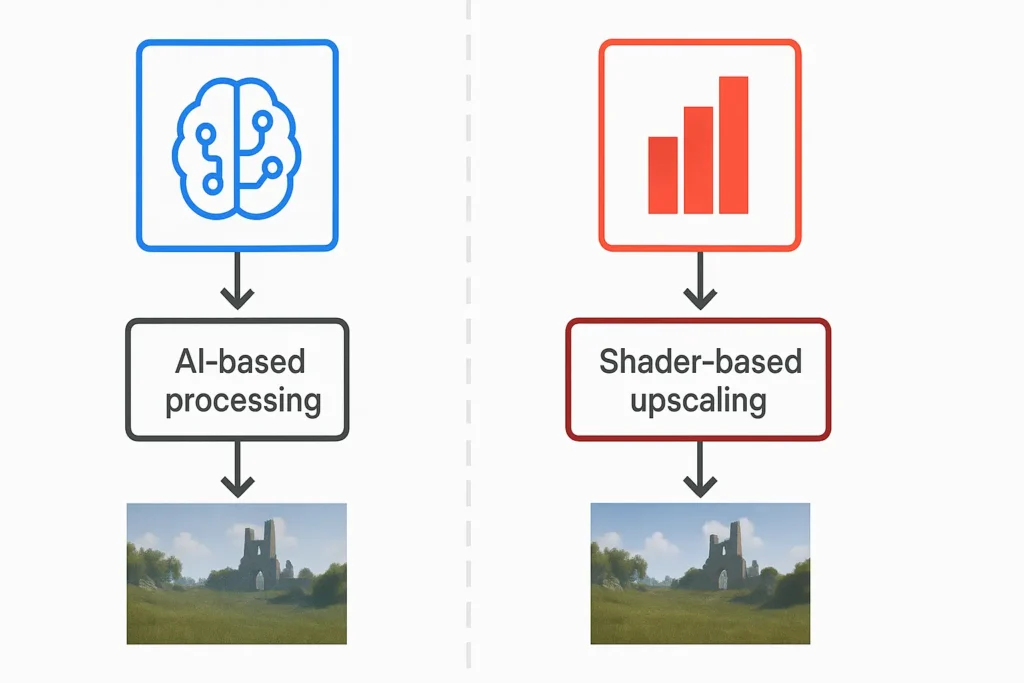
Upscaling technologies are a game changer for 1440p. NVIDIA’s DLSS and AMD’s FSR allow the GPU to render the game at a lower resolution and intelligently upscale it, resulting in near native image quality with a substantial boost in Frame Rate. This means you can get 1440p performance with a card that might otherwise only handle 1080p natively.
Pushing the Limits Entry Level 4K with a Mid Range Budget
While true, high FPS 4K gaming remains the domain of flagship GPUs, the highest tier of the mid range can deliver an enjoyable entry level 4K experience (e.g., 60 FPS with some settings adjustments and upscaling).
What to Expect from 4K in the Mid Range Tier
The highest end mid range cards, such as the RTX 4070 Ti or the Radeon RX 7900 GRE/7900 XT, are needed here. These cards feature the necessary processing power and high VRAM capacity (16GB or more) to render high resolution textures. Buyers must be willing to use upscaling (DLSS/FSR) and potentially lower intensive settings like Ray Tracing to maintain playable frame rates.
The Importance of Upgrading Your CPU to Avoid Bottlenecks
At 4K, the GPU is usually the primary bottleneck, but ensuring your CPU is modern and powerful is still critical. Pairing an entry level 4K GPU with an old central processor will create an unnecessary bottleneck, limiting your new card’s potential. Consider a balanced PC build that ensures neither component is holding the other back.
Feature Face Off Ray Tracing, VRAM, and the Value Equation
How Much VRAM is Truly Required for Modern Titles?
For 1080p, 8GB is sufficient. For high setting 1440p, 12GB is the safer, more future proof choice. For any flirtation with 4K, 16GB of Video RAM should be the minimum target to ensure game textures load correctly without performance hits. VRAM capacity is a key GPU specification that determines the longevity of your purchase.
NVIDIA vs. AMD Ecosystem and Feature Comparison
- NVIDIA: Generally offers superior Ray Tracing performance and a more mature ecosystem with its DLSS upscaling technology and CUDA cores for productivity tasks (making it a better choice for video editors).AMD: Provides a stronger price to performance ratio for raw rasterization (traditional rendering) and often equips their cards with more VRAM at a given price point. FSR is open source and widely adopted.You can find official developer documentation for AMD FSR to understand its widespread compatibility.
Buying Guide Final Considerations for Your GPU Purchase
Avoiding the Bottleneck Pairing Your GPU with the Right CPU
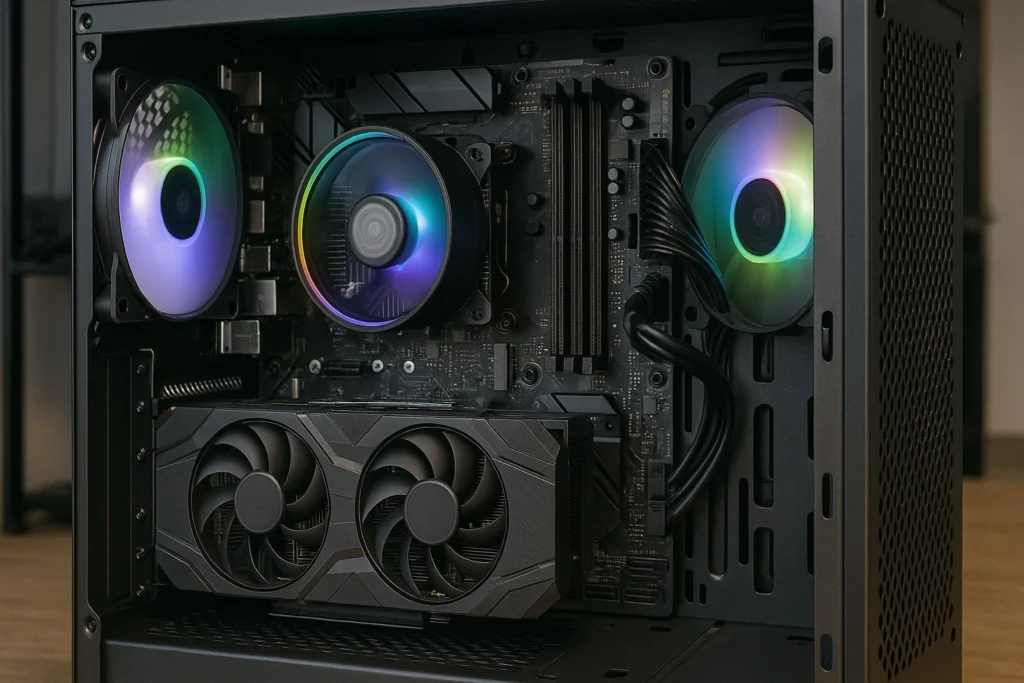
When selecting your GPU, remember the CPU. If you buy a powerful mid range GPU but pair it with an underpowered, older CPU, you will not see the expected graphics card performance. Research pairings and ensure your CPU is capable of delivering enough draw calls to keep the GPU fully utilizedCPU/GPU Pairing Guide.
Monitoring the Market When to Buy Your New Graphics Card
The mid range graphics card price fluctuates regularly. New model releases or major seasonal sales (e.g., Black Friday, Cyber Monday) are the best times to look for the highest value proposition. Track major retailers and comparison sites for optimal purchasing timing.
Conclusion
Choosing the best value mid range GPUs requires a careful assessment of your primary gaming resolution, budget, and desired feature set. Whether you prioritize high refresh 1080p with an RTX 4060, stable 1440p with an RTX 4070 or RX 7800 XT, or a taste of 4K with a higher end mid range card, the current market offers incredible performance for the money. By focusing on VRAM, upscaling capabilities, and the price to performance ratio, you can confidently select a graphics card that delivers outstanding gaming experiences without sacrificing your PC build budget.
FAQ Section
What is a midrange GPU in 2025?
In terms of pricing, the mid range generally falls between $300 and $600. Performance wise, these cards are optimized for high FPS 1080p and excellent 1440p gaming resolution.
How much VRAM do I need for 1440p gaming?
For a future proof 1440p experience on high settings in modern games, 12GB of VRAM is highly recommended. 8GB is quickly becoming a minimum standard.
Is the RTX 4060 Ti good for 4K gaming?
The RTX 4060 Ti can manage entry level 4K, but you will need to rely heavily on DLSS upscaling and potentially lower graphic settings to maintain a playable frame rate (above 60 FPS).
Should I buy an older high end GPU or a new mid range GPU?
It is generally better to buy a newer mid range GPU. Newer cards offer better power efficiency, better Ray Tracing, and access to the latest upscaling technologies (like DLSS 3) that older cards lack.
What GPU offers the best performance for the price?
For rasterization, AMD often holds the edge with cards like the RX 7800 XT. For overall features and efficiency (DLSS, Ray Tracing), NVIDIA’s x70 series usually provides the best all around value.