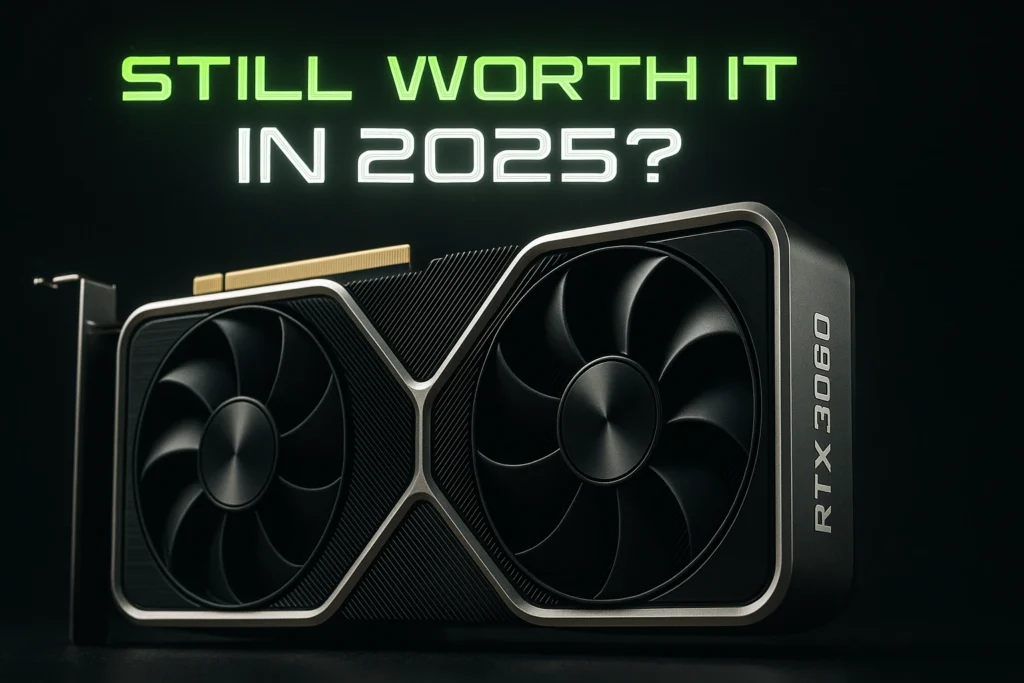

The NVIDIA RTX 3060 Graphics Card is a grizzled veteran of the gaming world, now four years post launch. Originally released to tackle the mid range market, it quickly became a favorite for its performance and generous VRAM allocation. The rapid pace of GPU innovation and demanding new titles begs the question is this Ampere based mid ranger still worth it in 2025? We will analyze its current performance, deep dive into the unique value of its 12GB VRAM, and compare its pricing against both new and used competitors to provide a clear verdict for potential buyers.
The RTX 3060’s Performance Profile in 2025 1080p and 1440p
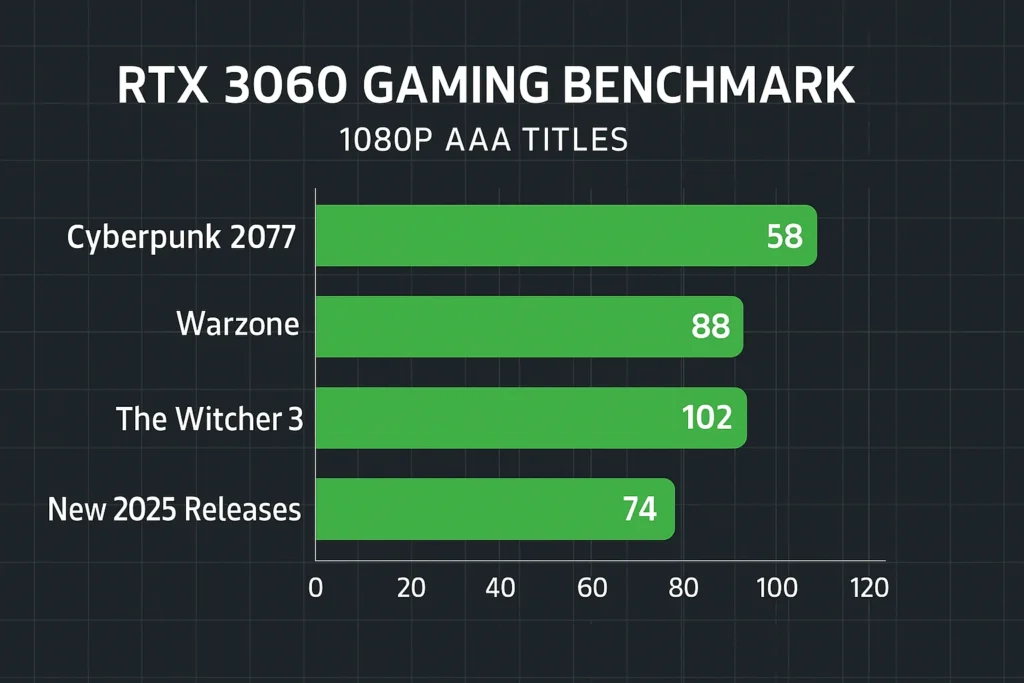
By 2025, the RTX 3060 has settled firmly into its role as a premier 1080p gaming solution, with limited entry into the more demanding 1440p space. Its core architecture, though aging, still provides a formidable foundation for high quality gaming experiences, provided you are smart about your settings.
Mastering 1080 High Settings and High Frame Rates
For the vast majority of competitive and triple A titles, the RTX 3060 delivers exceptional performance at 1080p resolution. You can confidently set graphics to high or ultra in popular competitive shooters like Valorant and Apex while pushing frame rates well over 144 FPS. Even in more demanding single player games, achieving a stable 60 FPS is highly achievable without relying on performance mode upscaling.
This level of stability at 1080p gaming is one of the card’s greatest assets. It means that if you are building a new PC around a 1080p monitor, the 3060 is more than capable of handling every modern title thrown its way.
1440p Gaming Where the 3060 Starts to Strain
Stepping up to the 1440p medium settings market is where the 3060 faces its biggest challenge. While technically capable of running the resolution, you will often need to drop settings to ‘Medium’ or ‘High’ and rely heavily on DLSS 2.0 for a smooth 60 FPS experience. For a demanding game like Cyberpunk 2077 or Wukong, achieving 60 FPS at 1440p often means the visual quality will take a noticeable hit.
- Best 1440p Strategy: Target 45 or 55 FPS natively, then use DLSS Quality mode to reach the desired 60 FPS target.
- Worst Case Scenario: Ray Tracing at 1440p is largely off the table, even with upscaling.
Real World Benchmark Cyberpunk, Warzone, and New AAA Titles
Analysis of recent benchmark data confirms this trend. In Call of Duty Warzone, the GPU can push into the triple digits (100+ FPS) at 1080p with optimized settings. However, in heavily optimized, newer titles like Indiana Jones and the Great Circle or Stalker 2, it may struggle to maintain 60 FPS without applying some level of upscaling. The card is highly dependent on games that implement NVIDIA’s suite of features.
The VRAM Advantage Why 12GB is the 3060’s Lifeline
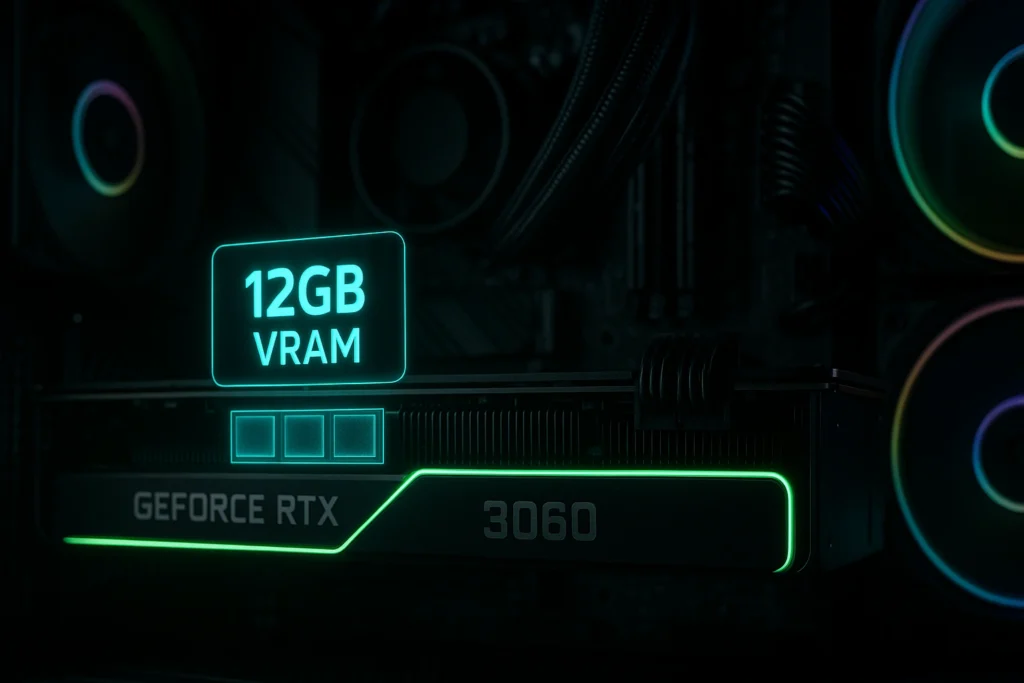
The single feature that secures the RTX 3060 Graphics Card a spot in the 2025 conversation is its massive 12GB of VRAM. This allocation has aged exceptionally well, especially when you compare it to newer, more expensive cards that launched with only 8GB.
VRAM vs. Core Power Longevity in Modern Games
In 2025, many modern AAA titles, particularly those with high resolution textures or demanding open worlds (like Escape from Tarkov), are aggressively chewing up video memory. Even at 1080p, the frame buffer requirements are pushing past the 8GB mark. Having 12GB VRAM means the 3060 is protected against the stuttering and texture pop in that cards with smaller buffers now experience. This VRAM buffer is arguably more important for long term future proof gaming than a slight increase in core power.
Content Creation and AI or ML Beyond Gaming Productivity
While gaming is the primary focus, the 12GB buffer provides significant leverage in professional and enthusiast fields, making the 3060 one of the best value oriented cards for these uses.
- Content Creation: The powerful NVENC encoder ensures fantastic quality for streamers and video editors using applications like Adobe Premiere Pro or Davinci Resolve.
- AI or Machine Learning (ML): The large memory capacity makes the 3060 a phenomenal budget card for local LLMs (Large Language Models), Stable Diffusion image generation, and training moderately sized ML models. Most 8GB cards simply cannot perform these tasks effectively.
How Does the 12GB Model Stack Up Against the 8GB Cards?
The 12GB model is the only one truly worth considering in 2025. Its 8GB sibling, the RTX 3060 Ti, is technically faster in raw processing power, but its smaller VRAM pool will inevitably become a significant performance bottleneck sooner. The larger 12GB VRAM on the base 3060 future proofs it more effectively than the 3060 Ti’s higher clock speed.
Value Analysis Is the RTX 3060 Worth Buying New or Used?

The final verdict on whether the RTX 3060 Graphics Card is still worth it in 2025 comes down entirely to its price point. The market is vastly different from its launch.
The New Market Trap High Price, Low Value
If you are looking at a brand new RTX 3060, you will likely encounter a pricing issue. New models often hover too close to the current price of more modern, efficient cards like the RTX 4060 or AMD’s RX 7600 XT. Paying a premium for a card based on an older architecture with significantly less efficiency is generally a poor investment.
The Used Market Sweet Spot Pricing for the 12GB Card
The used market price is the RTX 3060’s salvation. If you can find the 12GB model for under $270 USD (or equivalent local currency), it transforms into an incredible value proposition. This optimal pricing is crucial; you should check the current Market Pricing and Value History for the RTX 3060 12GB to make an informed choice. At this price, the performance, the 12GB VRAM, and the stable NVIDIA ecosystem make it difficult for any new or used competitor to beat. This is the sweet spot for the savvy, budget gaming PC builder.
Total Cost of Ownership (TCO) and Power Consumption
While the RTX 3060 is affordable to purchase, consider its higher power draw compared to the newer generation. The 4060 has a far more efficient TDP. This difference might not affect everyone, but for users in high energy cost areas, the long term running costs of the older Ampere card should be factored into the overall TCO equation.
RTX 3060 vs. The Competition 4060, 7600 XT, and Last Gen Rivals
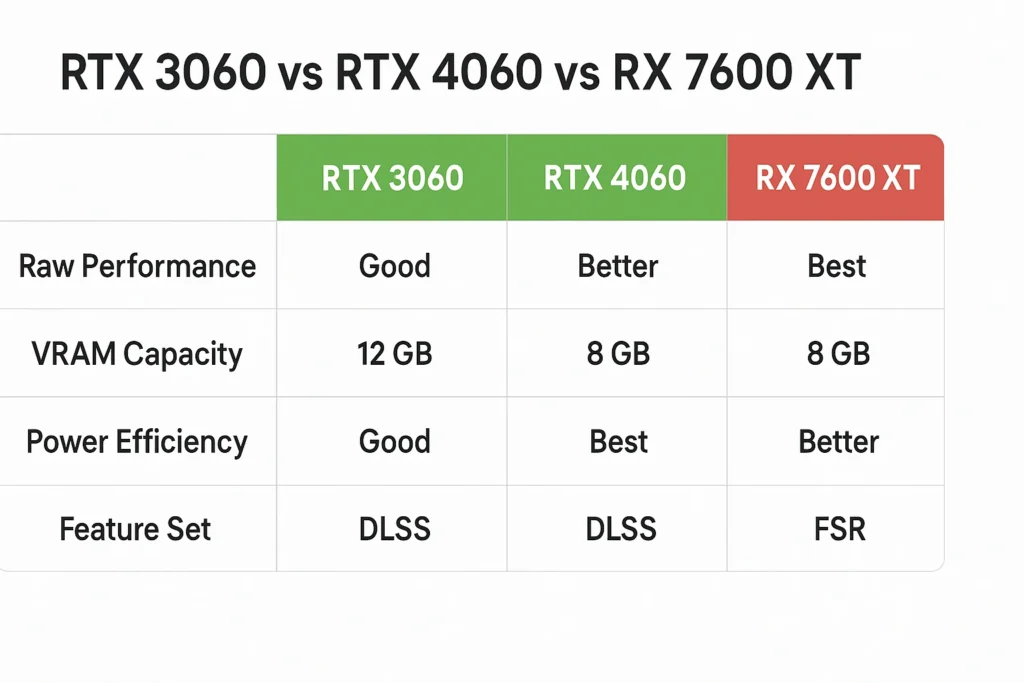
Understanding the RTX 3060’s place requires a direct comparison against its main rivals in 2025.
NVIDIA Family Rivalry RTX 3060 vs. RTX 4060 (Efficiency and DLSS 3)
| Feature | RTX 3060 (12GB) | RTX 4060 (8GB) | Winner & Why |
| Raw Performance | Lower | Higher | RTX 4060 (Newer architecture, higher core speed) |
| VRAM Capacity | 12GB | 8GB | RTX 3060 (Crucial for 2025 texture needs) |
| Efficiency (TDP) | ~170W | ~115W | RTX 4060 (Significantly more power efficient) |
| Feature Set | DLSS 2.0 | DLSS 3.0 (Frame Gen) | RTX 4060 (DLSS 3 is a major longevity feature) |
The 4060 wins on technology (DLSS 3) and efficiency, but the 3060’s superior VRAM buffer makes it a safer bet for high texture 1080p gaming over the long run.To see exactly how these two cards stack up in modern games, check out these Detailed Performance Benchmarks RTX 3060 vs. RTX 4060 in 2025.
The Red Team Challenge Comparing to the RX 7600 XT
AMD’s main rival is the RX 7600 XT, which also boasts 16GB of VRAM and competitive raw rasterization performance. At similar price points (if bought new), the RX 7600 XT often offers better pure rasterization (non Ray Tracing) performance than the 3060. The 3060’s counterpunch is its superior feature set, particularly the quality of DLSS over AMD’s FSR, and the stability of the NVENC encoder for streaming.
The Importance of the NVIDIA Ecosystem (DLSS and NVENC)
When comparing the RTX 3060 Graphics Card to any AMD rival, the value of the NVIDIA Ecosystem cannot be overstated. NVIDIA’s driver stability and software suite, including its powerful and efficient NVENC encoder, remain industry leading. For users who stream or engage in video editing, this single feature often outweighs a small rasterization performance lead from the competition.If you are looking for a significant performance jump to 1440p gaming or better efficiency, consider reading our full RTX 4070 Graphics Card Review and Benchmarks.
Future Proofing for the Remainder of 2025 and Beyond
Is the RTX 3060 a true future proof card? In the budget segment, few cards are, but the 3060 is better positioned than many of its peers.
Ray Tracing Limitations and DLSS Dependency
While the card supports Ray Tracing, it is simply not powerful enough to run it effectively in most modern titles. The moment you enable Ray Tracing, you become completely dependent on DLSS performance mode, which sacrifices visual clarity. Consider the Ray Tracing feature of the 3060 a novelty, not a core function. It’s best used as a pure rasterization card.
PSU Requirements and AIB Cooling Considerations
The card’s TDP is around 170W, which is manageable for almost any modern system using a 550W to 650W power supply. However, look closely at the specific model you purchase (AIB). Budget oriented RTX 3060 models often come with less robust cooling solutions. When buying used, ensure the card you select has a decent two or three fan cooler to maintain optimal thermals and noise levels over time.
When Should You Start Considering the RTX 50 Series?
If you are buying a used RTX 3060 in 2025, it should be treated as a bridging solution. You can expect it to offer a great experience for the next two years, after which you will likely hit hard VRAM and core performance walls in demanding titles. Plan for an upgrade around 2026/2027, ideally to a next generation card like a hypothetical RTX 5070, which would offer a monumental jump in performance and efficiency.
Conclusion
Is the RTX 3060 Graphics Card Still Worth It in 2025? Yes, but only in one specific scenario the used market.
The card’s core strength is its generous 12GB VRAM buffer, which provides crucial longevity for both 1080p gaming and specialized tasks like content creation and AI or ML. When purchased new, its outdated architecture and poor efficiency make it a hard sell against the RTX 4060 and RX 7600 XT.
However, if you can find the 12GB model for a good used market price (under $270), it represents one of the best value oriented mid range GPU purchases available. It remains a powerful 1080p gaming champion that provides a viable entry into light 1440p gaming with DLSS. Compare the price of a used 3060 with the current price of a new RX 7600 XT before making a final decision. The 12GB VRAM makes the RTX 3060 Graphics Card a powerful and relevant performer for 2025.
FAQs Section
1. Is the RTX 3060 better than the RTX 4060?
Generally, no, the RTX 4060 is technically “better” due to its newer architecture, higher efficiency (lower power draw), and support for DLSS 3 Frame Generation. However, the RTX 3060 has a significant advantage with its 12GB VRAM buffer compared to the 4060’s 8GB. For longevity in modern, VRAM hungry games, the 3060’s larger memory pool makes it a safer bet for high quality 1080p settings, making it a better value in specific, used market scenarios.
2. Can the RTX 3060 run 1440p games at 60 FPS in 2025?
Yes, but with caveats. The RTX 3060 is primarily a 1080p card. To run most modern AAA games at a stable 60 FPS at 1440p, you will need to utilize DLSS set to ‘Quality’ or ‘Performance’ mode and may have to drop graphics settings from Ultra to Mediumor High. It is considered an entry level card for 1440p gaming.
3. What is a fair used price for the 3060 12GB in 2025?
A fair and competitive used price for the RTX 3060 12GB model in 2025 generally falls in the range of $220 to $270 USD. At this price point, its value proposition for 1080p gaming and content creation (thanks to the 12GB VRAM) is excellent and highly competitive against both new and used rivals.
4. Is the 12GB VRAM on the RTX 3060 still relevant for modern games?
Absolutely. The 12GB VRAM is the single most important factor keeping the RTX 3060 relevant in 2025. Many current AAA titles and upcoming releases are pushing VRAM requirements past 8GB even at 1080p. The large buffer prevents stuttering and performance dips associated with running out of video memory, providing crucial future proof longevity.
5. How does the RTX 3060 compare to the RX 7600 XT?
The AMD RX 7600 XT often offers slightly better raw rasterization (non Ray Tracing) performance than the RTX 3060 at a similar new price point. However, the RTX 3060 wins on feature quality, offering a superior experience with DLSS (over FSR) and the industry leading NVENC encoder for streaming and video editing. The choice often comes down to prioritizing raw FPS (AMD) versus feature set and ecosystem (NVIDIA).