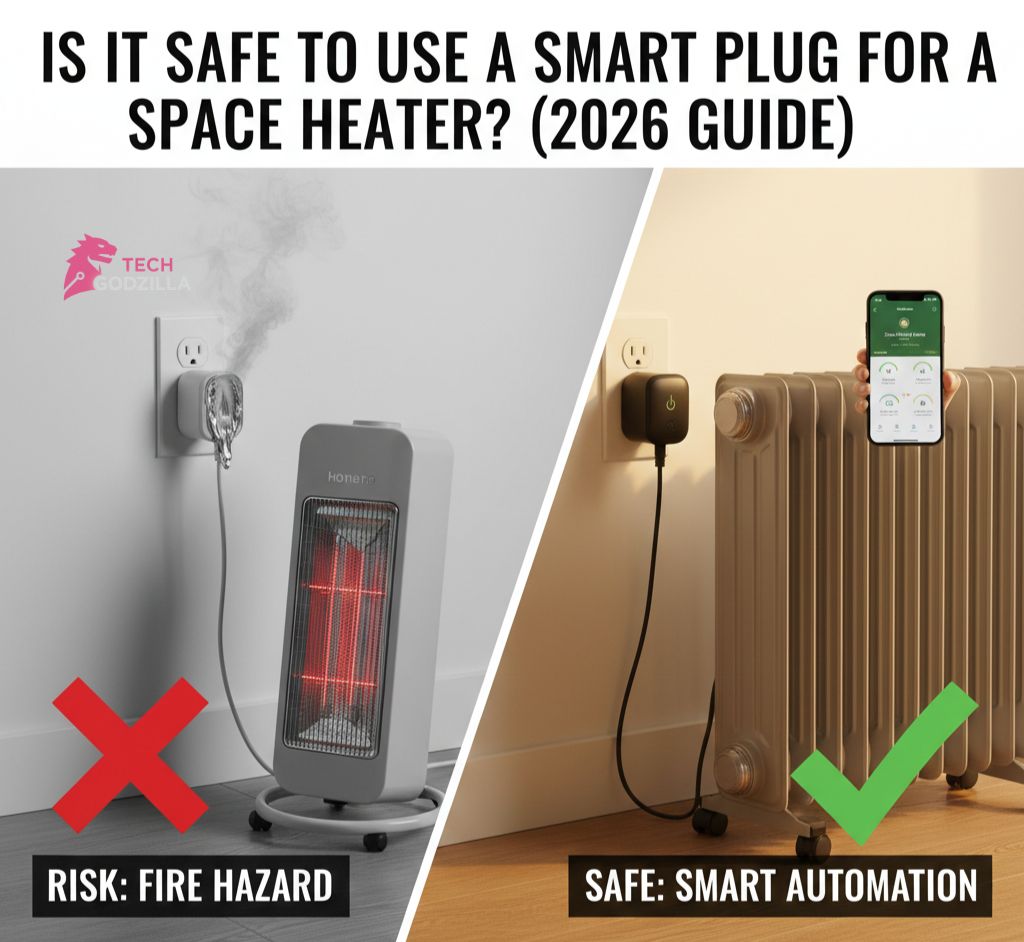

Quick Answer: You can safely use a smart plug for a space heater only if the plug is rated for 15 amps (1800 watts) and carries a UL or ETL safety listing. Most standard smart plugs are only rated for 10 amps and will melt under the heavy electrical load of a heater. For maximum safety, plug the smart switch directly into a wall outlet and ensure your heater has a mechanical “on” switch.
Using a smart plug for a space heater is one of the most effective ways to automate your home’s comfort, allowing you to preheat a room before you even step inside. However, because space heaters are high-draw appliances, this convenience comes with significant safety responsibilities. Most standard smart plugs are designed for low-power devices like lamps or fans; plugging a 1500W heater into one can lead to overheating, melted plastic, or even a house fire.
In 2026, safety standards have evolved. To automate safely, you must move beyond basic “on/off” timers and understand the technical requirements of your home’s electrical system. This guide breaks down the essential 15-Amp Rule, explains why certain heater types fail with automation, and provides a safety-first checklist for winter heating.
Is it Safe to Use a Smart Plug for a Space Heater?
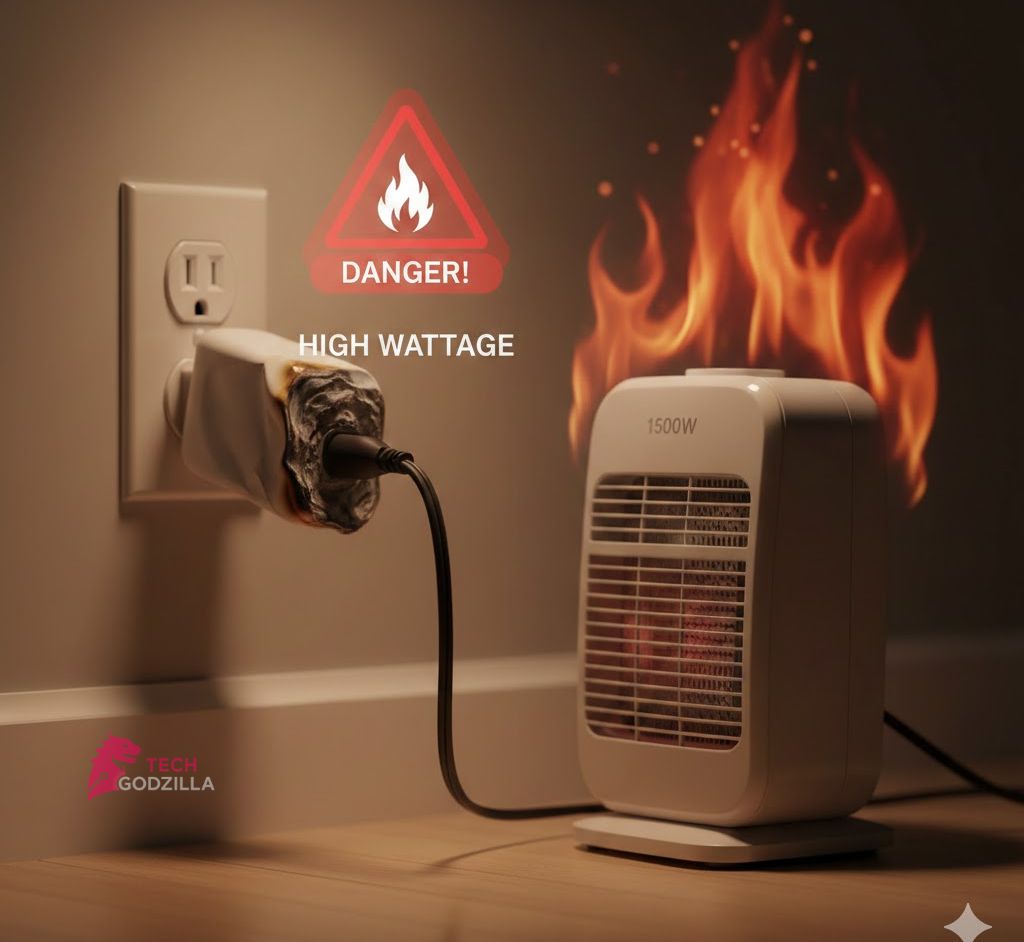
Automating a space heater is safe only if your hardware is up to the task. The primary risk is a “wattage mismatch.” A standard 1500W space heater pulls about 12.5 Amps of power. If you use a common 10-Amp smart plug (often sold in cheap multi-packs), the internal components will overheat, leading to a fire hazard. In 2026, safety experts and fire marshals strictly recommend using only heavy-duty smart plugs that are explicitly rated for 15 Amps to handle the intense resistance heating required by these appliances.
The Technical Match Amps, Watts, and Continuous Loads
Understanding the 80% Rule is vital for home safety. Electrical codes suggest that for a “continuous load”—anything running for more than three hours—you should only use 80% of a circuit’s capacity. A 15-Amp smart plug is rated for 1800 Watts. Following the 80% rule, you should ideally keep your load around 1440 Watts. Since most US space heaters run at 1500 Watts, a 15-Amp plug is the absolute minimum requirement. Never attempt to use a space heater with a smaller 10-Amp (1200W) plug, as it provides zero safety margin.
Proper Setup to Prevent Fire Hazards
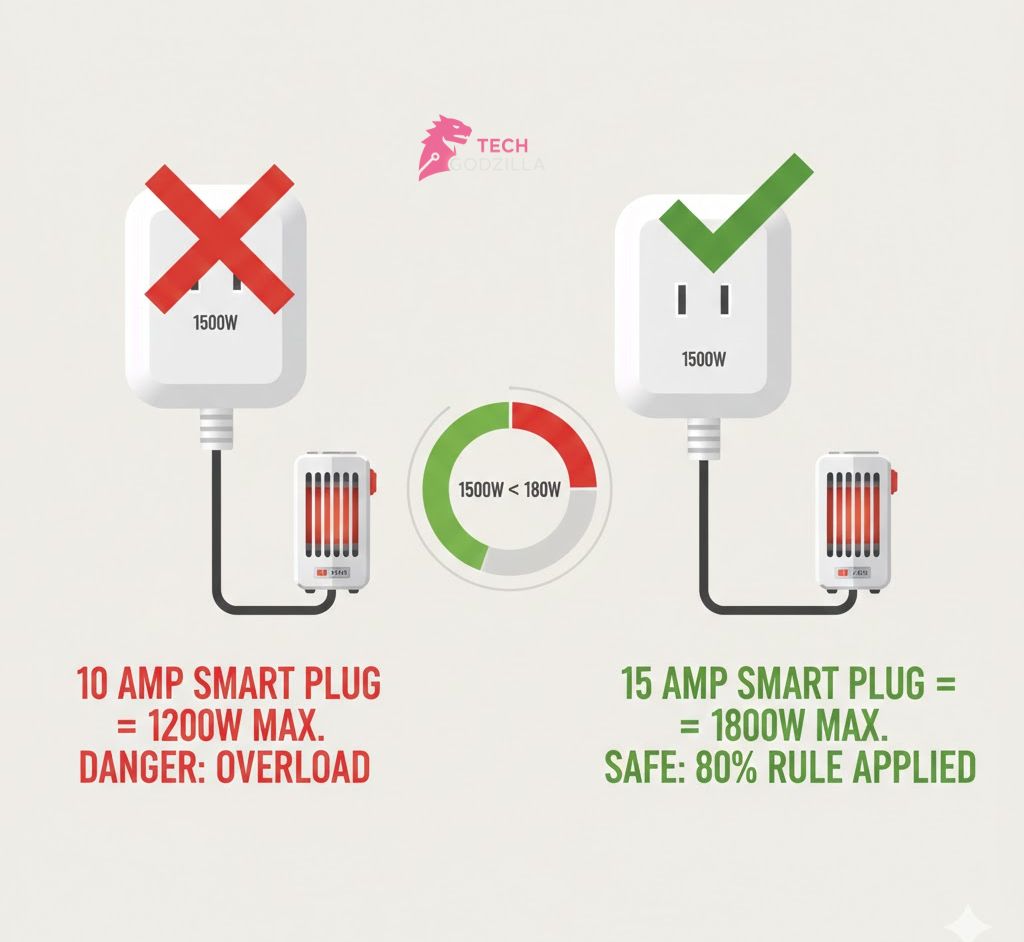
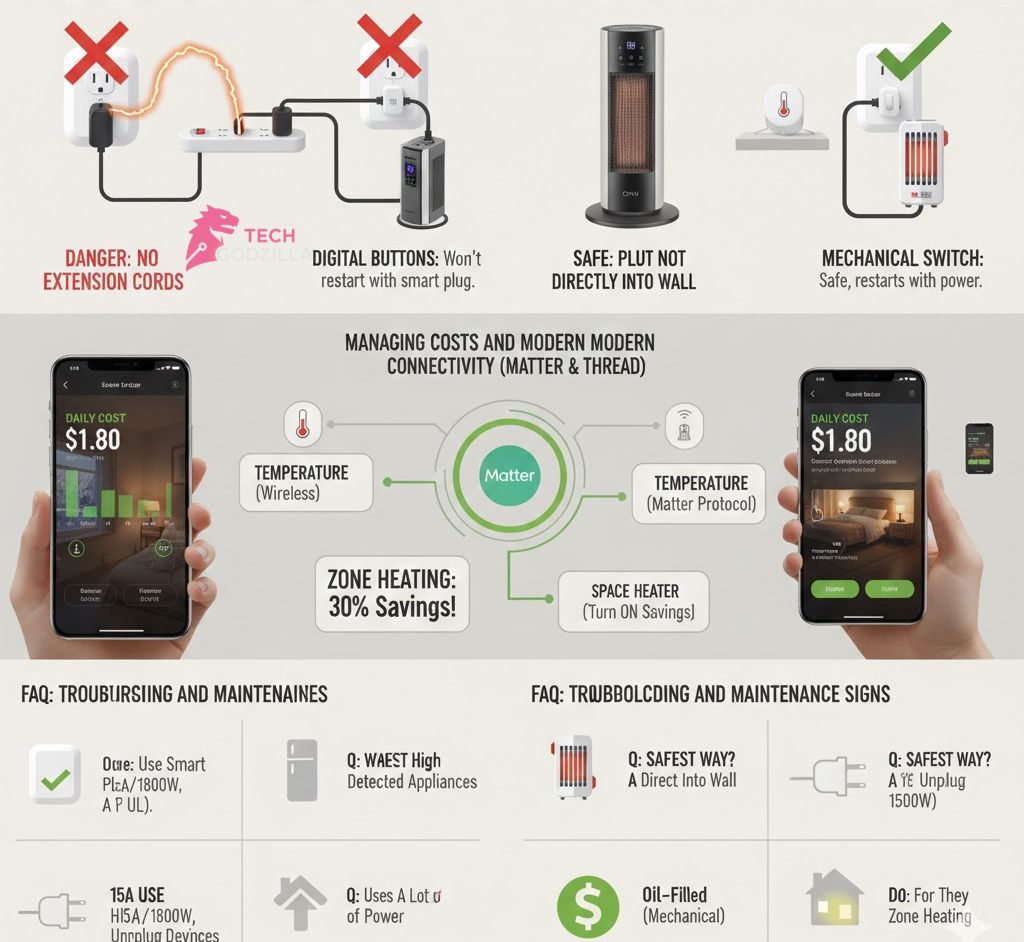
The safest way to set up your heater is to plug the smart switch directly into a wall-mounted outlet. You should never “daisy chain” your equipment by plugging a smart plug into a power strip or an extension cord. These extra connections create points of electrical resistance that generate heat. Additionally, check the fit of your wall outlet. If the smart plug feels loose or wiggles when plugged in, that loose connection can cause electrical arcing. If the outlet faceplate ever feels hot to the touch, power down the circuit immediately.
Choosing the Right Heater for Smart Automation
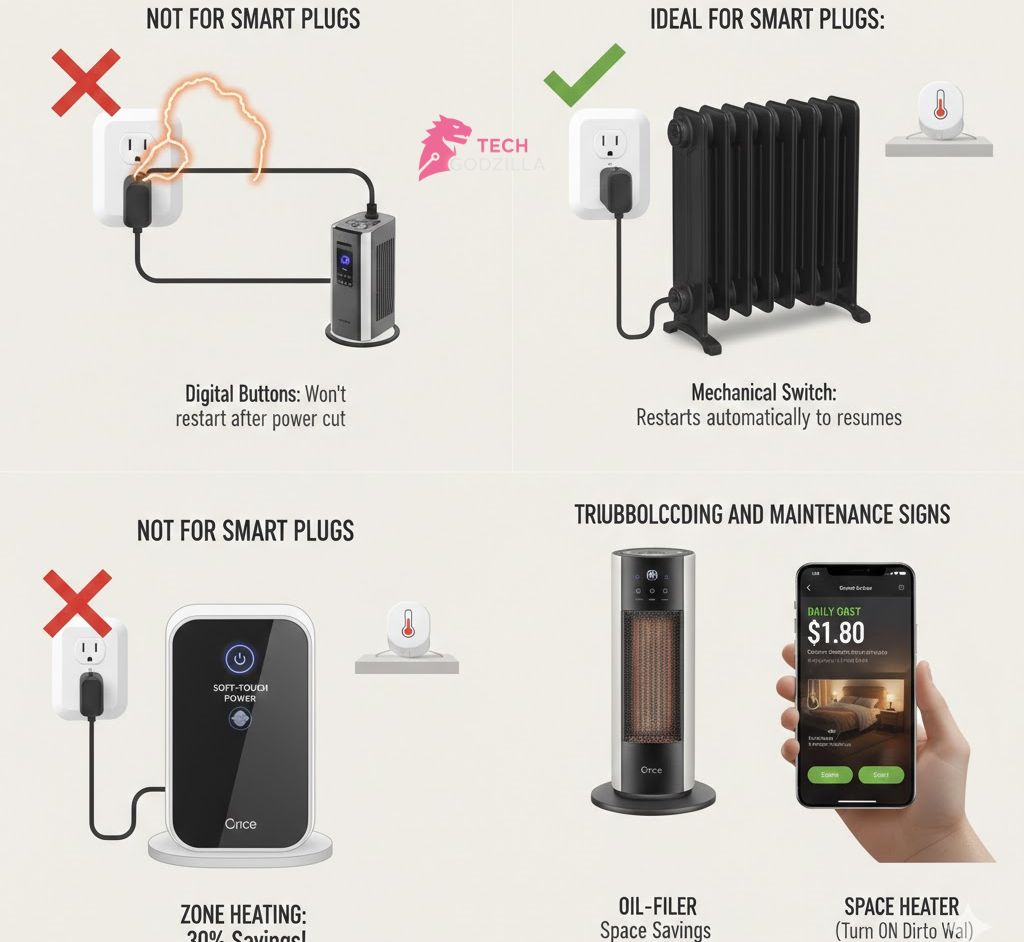
Not all heaters are compatible with smart plugs. Most modern ceramic heaters use “soft-touch” digital buttons that reset to an “Off” or “Standby” state when power is cut. If your smart plug turns off and then back on, these digital heaters will not restart. For the best results, use an oil-filled radiator or a basic fan heater with a mechanical toggle switch. These “analog” devices will stay in the “On” position, allowing the smart plug to successfully control the heating cycles.
Managing Costs and Energy Efficiency in 2026
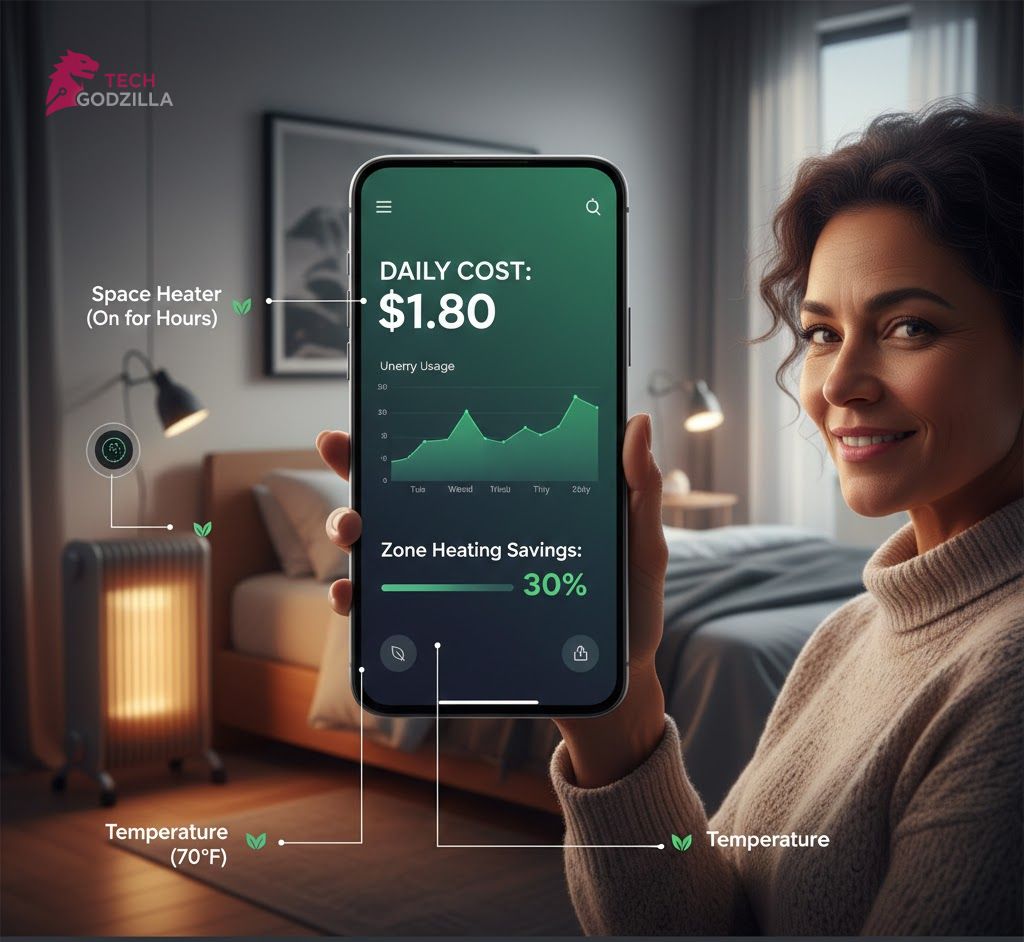
Using a smart plug can lower your winter utility bills through “zone heating.” Instead of running your central HVAC system to heat the entire house at night, you can use a smart plug to only heat the bedroom. In 2026, many heavy-duty plugs include energy monitoring features. This allows you to track exactly how many kilowatt-hours (kWh) your heater is consuming, helping you decide if it’s cheaper to turn up the central thermostat or continue using localized heat.
Smart Features and Modern Connectivity (Matter & Thread)
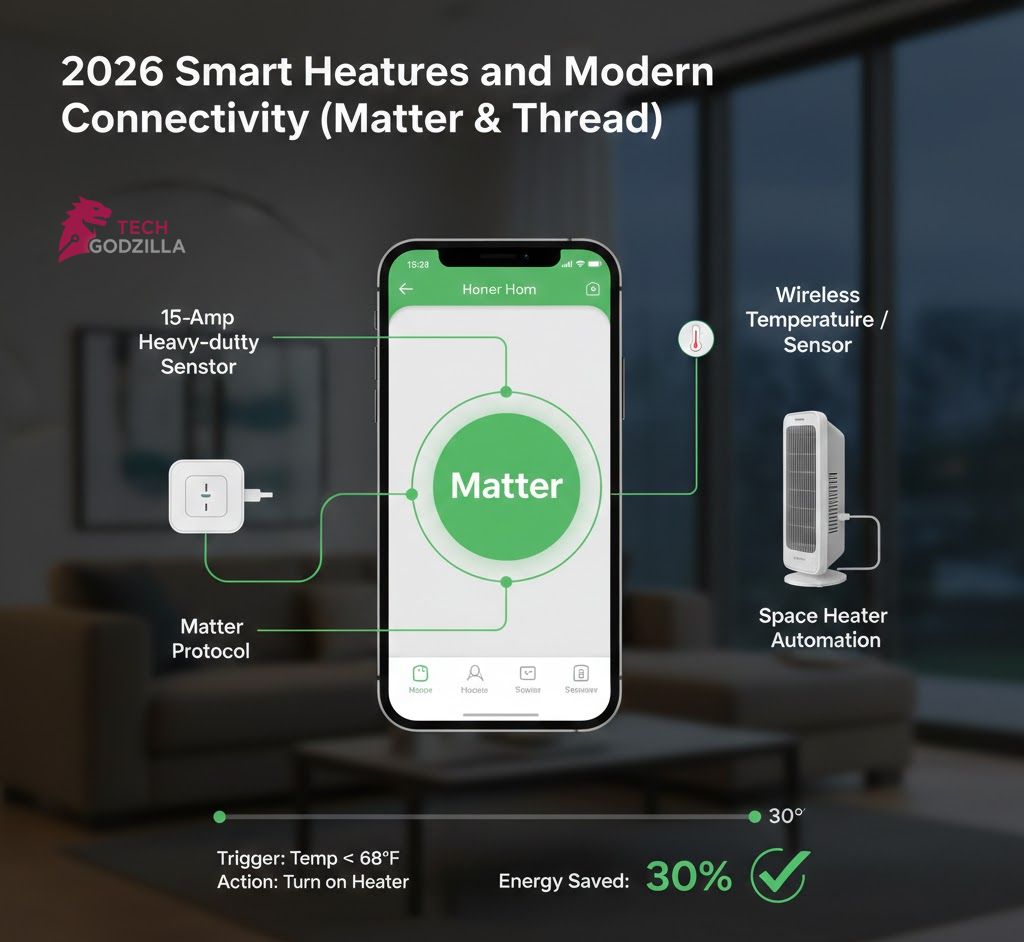
With the 2026 adoption of the Matter protocol, smart plugs are more reliable than ever. You can now easily pair a heavy-duty smart plug with a separate wireless temperature sensor placed across the room. Instead of a basic timer, you can create an automation: “Turn on the heater when the room hits 65°F and turn it off at 72°F.” This prevents the heater from running unnecessarily, reducing wear and tear on the plug’s internal relay and saving on electricity.
Troubleshooting and Maintenance Signs
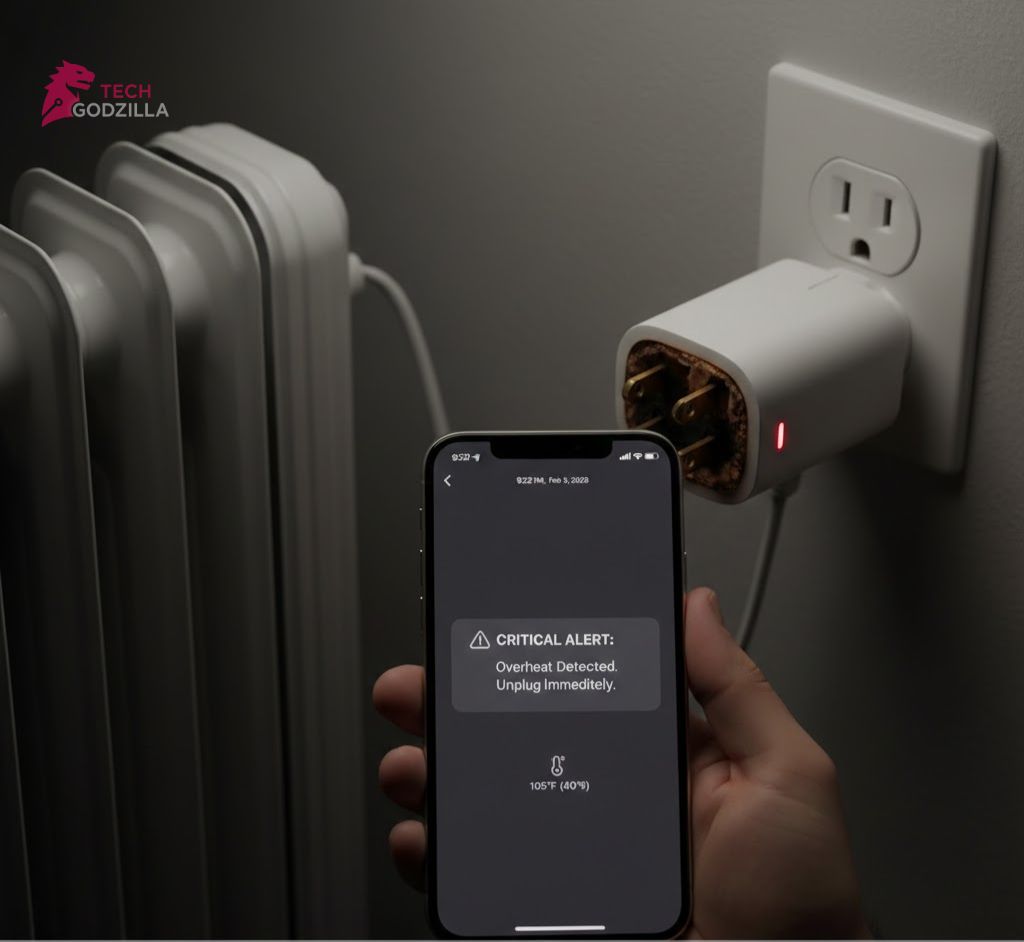
Regular maintenance is key to preventing accidents. If your smart plug “clicks” off frequently, it may be triggering a built-in safety shut-off due to an internal overheat sensor. Check the prongs of the plug for any signs of discoloration or “browning,” which indicates heat damage. Most high-end smart plugs now send “High Temp” alerts to your phone. If you receive one, replace the plug and inspect your wall outlet for damage before continuing use.
Beyond electrical safety, protecting your home from water damage is equally important. You can read more about our top recommendations for a smart water leak detector with no hub required to enhance your home’s security.
Frequently Asked Questions:
Can you use a smart plug on a space heater?
Yes, but only if the smart plug is rated for 15 amps (1800 watts) and is UL-listed. Most standard smart plugs are only 10 amps using one with a heater will cause the plug to overheat and melt. Always verify the amperage on the back of the device before plugging in a heater.
What should you not plug into a smart plug?
Avoid plugging in high-draw appliances that exceed the plug’s wattage rating. This typically includes refrigerators, window air conditioners, washing machines, and high-wattage hair dryers. Additionally, never plug a power strip or another smart plug into a smart plug (this is called “daisy chaining”).
What is the safest way to plug in a space heater?
The safest method is plugging the heater directly into a wall outlet. If you use a smart plug, it must be plugged directly into the wall socket as well—never use an extension cord. Ensure the connection is tight; a loose plug can cause electrical arcing and fire.
What is the best type of plug-in heater for smart plugs?
Oil-filled radiators are the best choice for automation. They are safer for long-term use and usually have mechanical “on/off” switches. Many modern ceramic heaters have digital buttons that reset to “Off” when the smart plug cuts the power, making them incompatible with automation.
Does a plug-in space heater use a lot of electricity?
Yes. Most US space heaters run at 1500 watts, which is about the maximum capacity for a standard household circuit. Running one for 8 hours a day can significantly increase your monthly utility bill, often adding $40 or more depending on local energy rates.
What should I plug a space heater into?
A space heater should only be plugged into a heavy-duty 120V wall outlet. Avoid using plastic power strips, multi-outlet adapters, or thin extension cords, as these are not designed to handle the sustained high heat load of a heater.
Do plug-in space heaters work?
They are very effective for zone heating (warming a single room). However, they are not intended to heat an entire house. They work best in enclosed spaces like bedrooms or home offices where you can trap the heat.
Is it cheaper to turn up the heat or use a space heater?
It is cheaper to use a space heater only if you are heating one room and lowering the central thermostat for the rest of the house. If you try to heat multiple rooms with space heaters, your electricity bill will likely be much higher than if you use your central furnace or heat pump.
Can you use a smart plug on a space heater?
Yes, but only if the smart plug is rated for 15 amps (1800 watts) and is UL-listed. Most standard smart plugs are only 10 amps using one with a heater will cause the plug to overheat and melt. Always verify the amperage on the back of the device before plugging in a heater.
What should you not plug into a smart plug?
Avoid plugging in high-draw appliances that exceed the plug’s wattage rating. This typically includes refrigerators, window air conditioners, washing machines, and high-wattage hair dryers. Additionally, never plug a power strip or another smart plug into a smart plug (this is called “daisy chaining”).
What is the safest way to plug in a space heater?
The safest method is plugging the heater directly into a wall outlet. If you use a smart plug, it must be plugged directly into the wall socket as well—never use an extension cord. Ensure the connection is tight; a loose plug can cause electrical arcing and fire.
What is the best type of plug-in heater for smart plugs?
Oil-filled radiators are the best choice for automation. They are safer for long-term use and usually have mechanical “on/off” switches. Many modern ceramic heaters have digital buttons that reset to “Off” when the smart plug cuts the power, making them incompatible with automation.
Does a plug-in space heater use a lot of electricity?
Yes. Most US space heaters run at 1500 watts, which is about the maximum capacity for a standard household circuit. Running one for 8 hours a day can significantly increase your monthly utility bill, often adding $40 or more depending on local energy rates.
What should I plug a space heater into?
A space heater should only be plugged into a heavy-duty 120V wall outlet. Avoid using plastic power strips, multi-outlet adapters, or thin extension cords, as these are not designed to handle the sustained high heat load of a heater.
Do plug-in space heaters work?
They are very effective for zone heating (warming a single room). However, they are not intended to heat an entire house. They work best in enclosed spaces like bedrooms or home offices where you can trap the heat.
Is it cheaper to turn up the heat or use a space heater?
It is cheaper to use a space heater only if you are heating one room and lowering the central thermostat for the rest of the house. If you try to heat multiple rooms with space heaters, your electricity bill will likely be much higher than if you use your central furnace or heat pump.